
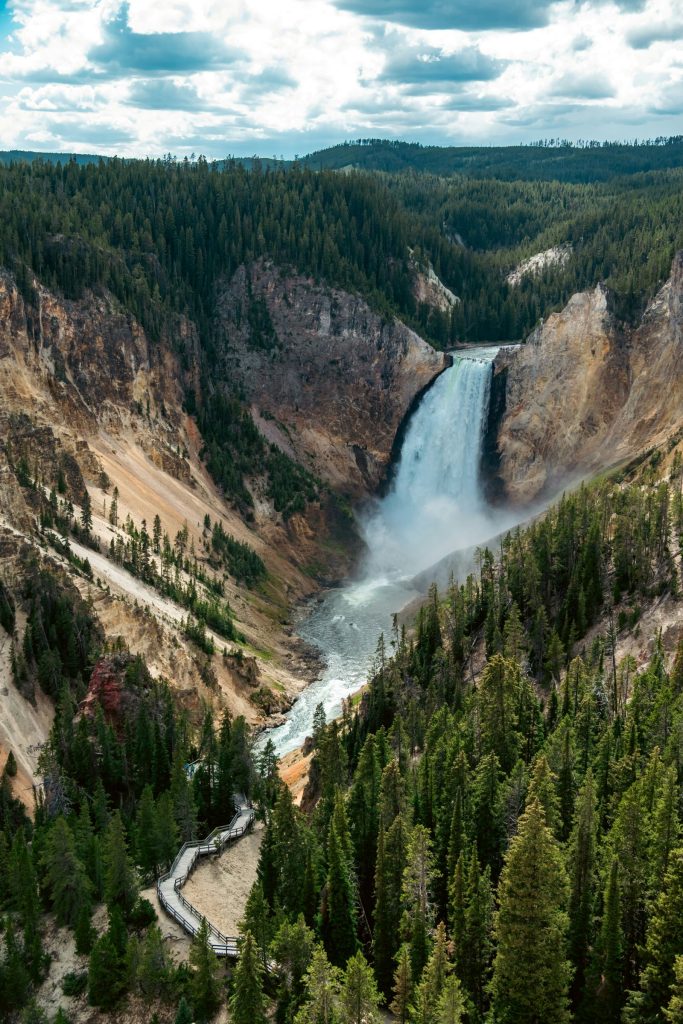
Yellowstone is one of those places where you can start a hike in sunshine and end it in hail, wind, or snow—even in the middle of summer. Packing smart isn’t about bringing everything, it’s about having the right layers and essentials for quickly changing conditions, wildlife, and long distances between services. So, if you’re wondering what to pack for hiking in Yellowstone, this year-round gear list covers it!
This guide focuses on day hikes in Yellowstone (not overnight backpacking) and is organized into:
- Core essentials (what almost everyone should carry)
- Clothing and layers
- Safety & wildlife-specific gear
- Seasonal adjustments for spring/fall, summer, and shoulder-season snow
Use this as a checklist you can adapt to your own style and trip.
Note: Always check current conditions and regulations on the official Yellowstone National Park website before you hike. Trail status, weather, and wildlife activity change frequently.
Core Day-Hike Essentials for Yellowstone
These are the items that belong in (or on) your daypack for most hikes in the park, regardless of season.
1. Daypack
A comfortable daypack makes everything else easier to carry.
Look for:
- Capacity around 18–28 liters for typical day hikes
- Padded shoulder straps and a hip belt
- At least one main compartment + a smaller pocket for quick-access items
- Side pockets for water bottles or loops for trekking poles (if you use them)
You don’t need anything ultra-technical, but you do want something that fits well once it’s loaded. If you want something simple that just works, I like the Osprey Sportlite 25L pack.
2. Water
Yellowstone is high enough and dry enough that dehydration sneaks up fast.
- Plan on at least 1–2 liters per person for short hikes
- For longer or hotter hikes, 2–3 liters per person is a safer target
Common options:
- 1L or 0.75L water bottles (easy and durable)
- A hydration bladder (convenient if you like sipping as you walk)
Don’t count on being able to refill on the trail—many routes have no safe water access.
3. Food & Snacks
Think “steady energy” rather than a single big lunch.
Good options:
- Trail mix, nuts, jerky
- Energy bars or granola bars
- Fruit (fresh or dried)
- Simple sandwiches or wraps for longer outings
Pack more than you think you need—it’s nice to have enough if the day runs long.
4. Navigation & Basics
Even on popular trails, it helps to have something better than memory.
- Phone with offline maps (download the area ahead of time)
- Optional: small paper map or trail brochure for a wider view
- Small multi-tool or knife
- Whistle (for signaling if you get separated or need help)
Phones are great, but don’t rely on signal—much of the park has none.
5. Sun & Bug Protection
The combination of elevation and reflective surfaces (water, snow) is no joke.
Pack:
- Sunscreen (face, neck, ears, hands)
- Lip balm with SPF
- Sunglasses
- Brimmed hat or cap
Bugs vary by season and location, but in many areas you’ll be glad you brought:
- Insect repellent
- Optional: lightweight bug net for your head if you’re sensitive
Clothing & Layers: What to Wear Hiking in Yellowstone
The key concept: layering. You want pieces you can add or peel off as temperatures swing.
1. Footwear: Boots or Shoes?
For most day hikes in Yellowstone, you’ll want:
- Hiking shoes or light boots with:
- Good traction
- Enough support for uneven terrain and occasional mud
- Broken-in before your trip (do not start with brand-new boots on day one)
If you’re mostly on well-maintained trails or boardwalks, lightweight hiking shoes can be perfect. If you plan on longer and rockier routes or early-season snow/mud, mid-cut boots add ankle support and protection. I prever the merrell moab 3’s for their versatility.
2. Socks
Socks can make or break a day.
- Choose moisture-wicking hiking socks (often wool or wool-blend).
- Avoid cotton—it holds moisture and can cause blisters.
- Consider bringing a spare pair in your pack for long or wet days.
3. Base Layer (Next to Skin)
This is your comfort layer.
- In most conditions, a lightweight synthetic or wool t-shirt is perfect.
- For colder days, a long-sleeve base layer can replace or supplement a t-shirt.
Again, skip cotton if you can—once it’s wet from sweat or rain, it stays clammy.
4. Mid-Layer (Warmth)
This is your “put it on when you stop” or “it just cooled down 20°F” layer.
Good choices:
- Lightweight fleece pullover or jacket
- Thin insulated jacket (synthetic or down) that compresses well
You may not wear this the whole time, but you’ll be glad to have it when wind picks up or the sun drops behind clouds.
5. Outer Layer (Wind & Rain)
Weather changes quickly in Yellowstone. Even in July, a storm can roll through with cold wind and rain.
Pack a waterproof (or at least water-resistant) shell:
- Lightweight rain jacket with a hood like the baleaf
- Ideally breathable enough to hike in if needed
If rain is in the forecast or you’re hiking at higher elevations, this jumps from “nice to have” to must-have.
6. Pants & Shorts
You’ll want legwear that can handle a range of temps.
- Hiking pants made from quick-drying fabric are ideal.
- Convertible pants (zip-off legs) can be handy if you like flexibility.
- In hot, stable weather, you can go with hiking shorts, but remember:
- Mosquitoes
- Brush and rough surfaces
- Rapid temperature drops once the sun is lower
A lot of people like light pants year-round for protection, then adjust warmth with base layers underneath in shoulder seasons.
7. Hats, Gloves & Extras
Even in summer, mornings and evenings can be chilly.
Consider adding:
- Warm beanie or knit hat (packs tiny, big payoff in comfort)
- Light gloves or liners
- Buff/neck gaiter (doubles as sun or wind protection)
You might not use these on every hike, but they’re easy to stash in your daypack.
Safety & Wildlife-Specific Gear
Yellowstone isn’t just about weather—it’s serious wildlife country.
1. Bear Spray
For most hikers in Yellowstone, bear spray is strongly recommended.
- Each adult in a group should ideally carry their own can within instant reach (not buried in the pack).
- Practice removing the safety and aiming (without discharging) before you’re on the trail.
- Learn and follow all park guidelines for traveling in bear country.
You can usually rent or buy bear spray near the park if you’re flying in and don’t want to travel with it. You’ll want to have quick access to your bear spray. You do not want it burried in your bag! I like to carry it with the counter assault waist holster.
2. First Aid & “Just in Case” Items
You don’t need a full expedition med kit, but you do want the basics:
- A small first aid kit with:
- Blister care (bandages, blister pads, tape)
- Adhesive bandages and gauze
- Antiseptic wipes
- Pain reliever of your choice
- Headlamp or small flashlight (plus batteries)
- Lightweight emergency blanket or bivy
- A few zip-top bags (for trash, wet items, or keeping things dry)
These weigh very little and provide huge peace of mind.
3. Trekking Poles (Optional but Nice)
Not mandatory, but they can be a game-changer for:
- Steeper or rockier trails
- Descents that bother knees
- Slippery or muddy conditions
- Early-season snow patches
If you don’t normally use them, consider them a comfort upgrade rather than a requirement. The Trekology Trek-Z collapsible hiking and trekking poles are the best.
Seasonal Packing Tips: What to pack for a day hike in Yellowstone
Now let’s dial the list in by season so you’re not over- or underpacking.
Spring (Late May–June) & Fall (September–October)
Expect: Cool mornings, variable afternoons, possible snow or ice on some trails, and muddy sections.
In addition to the core list, prioritize:
- Warmer base layers (long-sleeve top, possibly thermal bottoms)
- Thicker mid-layer (warmer fleece or slightly heavier insulated jacket)
- Warm hat and gloves (you’ll likely use them)
- Waterproof boots or at least water-resistant hiking shoes
- Extra socks in case of mud or snow
Trails at higher elevations may still have snow or ice—check current conditions and be ready to turn around if it feels unsafe.
Summer (July–August)
Expect: Warm to hot afternoons, cool evenings, strong sun, thunderstorms possible.
Key adjustments:
- Emphasize sun protection (sunscreen, hat, sunglasses).
- Consider lighter layers overall, but still bring:
- A rain jacket
- A light mid-layer for wind or sudden cool-downs
- Bring more water than you think you need if it’s hot.
- Bug repellent will likely see more use.
Even in the warmest months, never assume “shorts and t-shirt only” are enough—storms and changes in elevation change the equation quickly.
Shoulder-Season Snow & Colder Days
If you’re visiting in late fall or very early spring, or hiking at higher elevations where snow is lingering:
- Use hiking boots with better traction and some water resistance.
- Bring warmer socks and consider a thin liner sock.
- Consider microspikes or similar traction devices if icy conditions are likely (only if you’re comfortable using them).
- Pack a warmer insulated jacket and keep your rain shell handy in case of snow or freezing rain.
Always be conservative with route choice in these conditions—shorter, well-traveled trails are often the best bet.
Example Packing List: Day Hike in Yellowstone (Summer)
Here’s how this all comes together for a typical summer day hike:
Wearing:
- Hiking shoes or light boots
- Moisture-wicking t-shirt
- Lightweight hiking pants or shorts
- Hiking socks
- Sun hat or cap
In your daypack:
- 2–3 liters of water (bottles or bladder)
- Snacks and lunch
- Lightweight fleece or insulated layer
- Rain jacket with hood
- Sunglasses & sunscreen
- Insect repellent
- Bear spray (holstered where you can reach it)
- Small first aid kit & blister care
- Headlamp
- Phone with offline maps (+ optional paper map)
- Emergency blanket
- Extra pair of socks (nice backup if your feet get wet)
From here, you add or subtract warmer layers based on season and your personal comfort.
Final Thoughts
Packing for Yellowstone isn’t about having every piece of gear you’ve ever seen on a checklist—it’s about:
- Layers for quick weather changes
- Enough water and food for the distance you’re hiking
- Respecting the wildlife with bear spray and smart habits
- A few “just in case” items so unexpected delays or changes aren’t a big deal
Use this guide as your baseline, then adjust for your own comfort level and the specific hikes you have planned. Once you’ve done a day or two on the trails, you’ll get a feel for what you personally use all the time and what you can leave behind.
Pingback: Best Day Hikes in Yellowstone for First-Time Visitors - Hiking in Yellowstone
Pingback: - Hiking in Yellowstone